-
পরবাস
বাংলা ভাষা, সাহিত্য ও সংস্কৃতি
Parabaas, a Bengali webzine since 1997 ... ISSN 1563-8685 -
ছোটদের পরবাস
Satyajit Ray
Rabindranath Tagore
Buddhadeva Bose
Jibanananda Das
Shakti Chattopadhyay
সাক্ষাৎকার -
English
Written in English
Book Reviews
Memoirs
Essays
Translated into English
Stories
Poems
Essays
Memoirs
Novels
Drama

The Land Where
I Found It All-

Order Here for Free Shipping in India
-
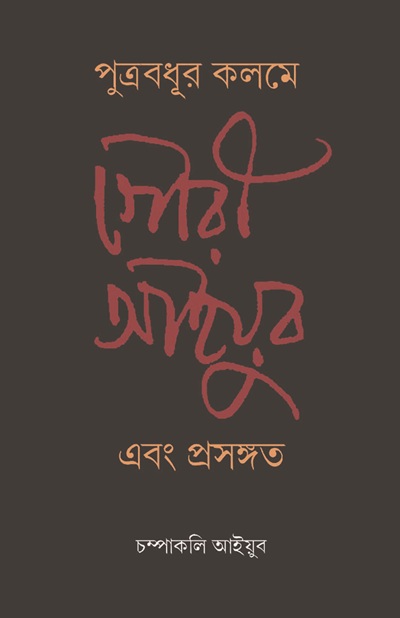
পুত্রবধূর কলমে গৌরী আইয়ুব এবং প্রসঙ্গত
-
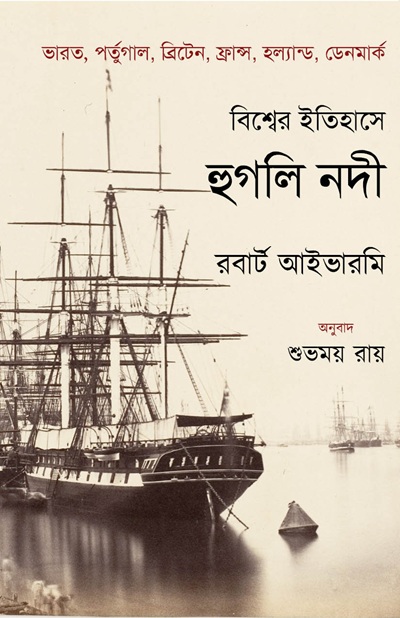
বিশ্বের ইতিহাসে হুগলি নদী
-

বেদখল ও অন্যান্য গল্প
-
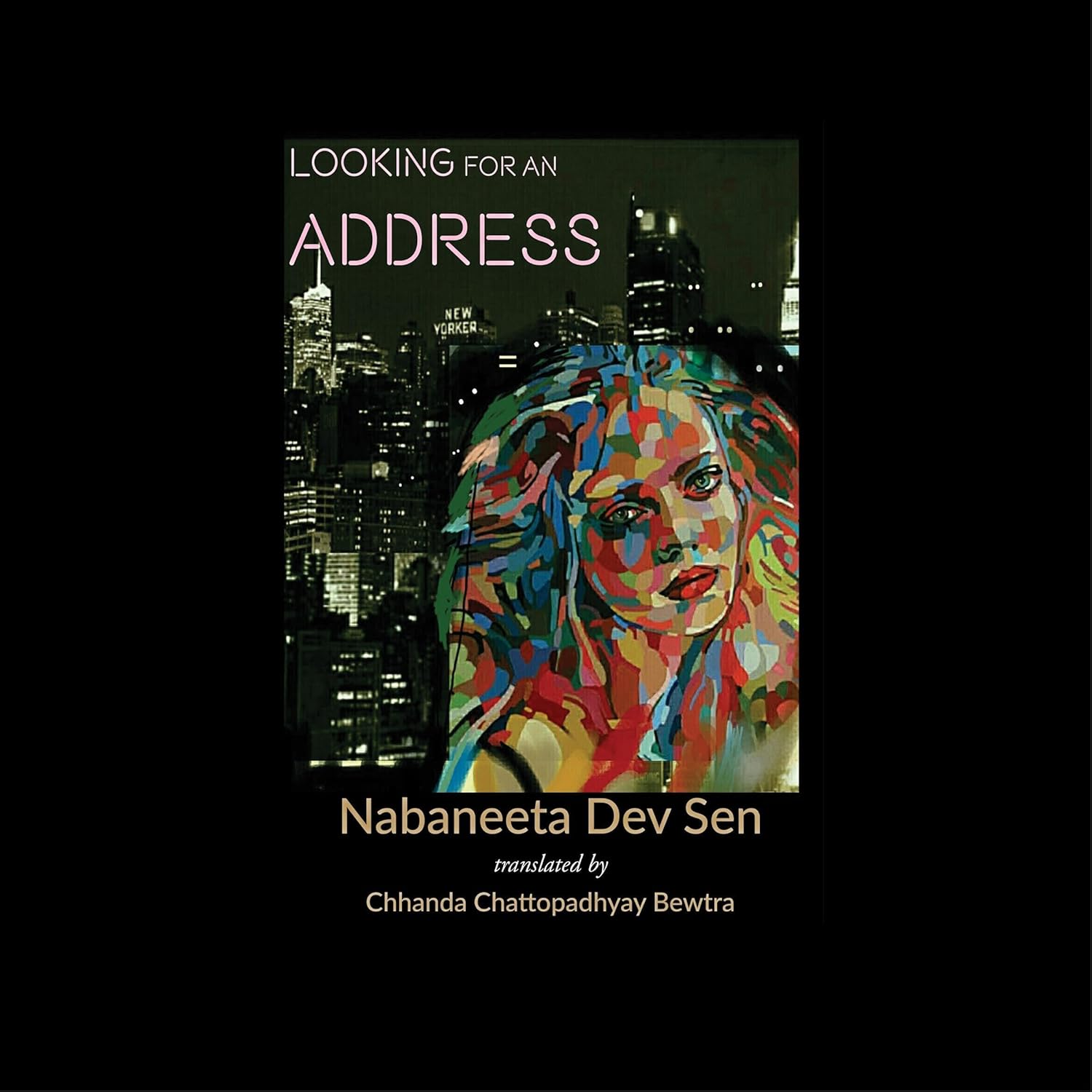
Audiobook
Looking For An Address
Nabaneeta Dev Sen
Available on Amazon, Spotify, Google Play, Apple Books and other platforms.
-

পরবাস গল্প সংকলন-
নির্বাচন ও সম্পাদনা:
সিদ্ধার্থ মুখোপাধ্যায়)
-

Parabaas : পরবাস : বাংলা ভাষা, সাহিত্য ও সংস্কৃতি -
পরবাস | English | Story
Share -
Chappal : Nandalal Majumdar
translated from Bengali to English by Nandini Gupta
When I went to my village this time, I heard something very strange. I was hanging out with some old friends; in the half-light of the dusk, Sugata smoking a cigarette, suddenly asked, “Have you heard?” I asked, “What?” “A number of people from Bauri Para1 have converted to Christianity.” I stopped in my tracks and pondered. We had been discussing the crisis in Bengal around the death of Suchitra Sen2. Now, in an instant, all conversation stopped. I asked, “How many?” Sugata did not know the actual number. He seemed to a bit confused.
This was the first religious conversion in our area. Nothing like this had ever happened before in Panchagram. True, there were a few distant Muslim villages, but no one remembered when or if they had converted. No one had a clue. So, the impact of this incident was similar for one and all, eight or eighty. All the others except me were already aware of the incident. After a short silence, each one aired his disapproval in his own style. It was clear that this has been a hot daily topic for quite some time. My friends wanted me to support their stances.
I do not view religious conversion as a sin. So, there was no question of support from my end. But things could have easily led to hostility among friends. I did not want that either. I visit the village infrequently. It did not make sense to piss them off. I realised that my friends were strongly affected by the rising tension in the village, and whatever I said might have consequences. If I wanted to influence their thinking, it would have to be done slowly over a period of time, not now. I cannot deny that I was afraid of being shunned and isolated.
For the sake of political correctness, I replied, “No doubt, this is quite a social upheaval.”
Let me enlighten those who do not know who the Bauris are. They are low caste Hindus. They are dark-skinned, strong-bodied, and have Adivasi3 features. But they are not tribal. They worship Goddess Manasa4 with much fanfare every year.
I asked Sugata, “Can you give me a few names, of those who have converted?” He said, “Many have. We don’t know all the names. They won’t tell us. But we have identified a few. Like, Phuli—Niyoti’s daughter. And Sadhu.” I asked, “Sadhu who?” He said, “Sadhu who used to graze cattle. Bagal5 Sadhu.”
This was difficult for me to accept. We always addressed Niyoti as ‘Khuri6’. She worked as a maid at Rini Kakima7’s house. Her daughter, Phuli. I know she studied upto the fourth standard in the primary school of our locality. Then she dropped out. Like her mother, she worked as a maid at a few houses. I had heard from Niyoti Khuri that they were looking for a match for her. One time, a match came apart even after a final agreement between both sides.
Sadhu had never been to school though. From childhood he was adept at grazing cattle. Phuli was younger, but Sadhu was about our age. After letting the cows loose in the fields, Sadhu would teach me the tricks to making talpata8 flutes. We went fishing together at the pond. In spring, Sadhu would sell newly-sprouted neem leaves from house to house.
Phuli, Sadhu, who we knew so well—they converted to Christianity! That was unbelievable! I felt a bottomless bewilderment: the kind you feel when you see a man walk home, and then suddenly hear he died. Kandan Bauri, Haren Bauri—they too had converted. Mostly the young people. But there was Manjula Mashi9, from among the elderly. Manjula Mashi shadowed my grandmother around the house. She did everything around the house: starting from making the cow dung cakes to fire the stove, to throwing out the ash after the cooking was done. Later when we got cooking gas, her work lessened. Even when she wanted to feed the dogs, my grandmother called for Manjula. Manjula Mashi had immense respect and faith for her Bamun10 Ginni, the lady of the Bamun house hold, for the Bamun caste, and above all, for every Hindu god and goddess. Then why did she turn Christian, all of a sudden?
It is Sajal who discovered the religious intrigue. He had some work in town, and he had taken a shortcut along the church lane when riding his bicycle back home. On seeing Phuli near the church in town, a flurry of questions invaded his brain. He asked, and Phuli, in her naivety told him that she and some others went to church on Sundays.
Sajal said nothing then, he carried all his reticence back to the village. He got together a few higher caste Hindus, initiated investigations in Bauri Para, and soon reported every minute detail to the villagers. There was a small meeting first, that considered hushing up the matter. Everyone was in agreement that this was a matter of great shame, and would bring ignominy to the village.
Sajal had never been politically active; he had always given political matters short shrift. And yet, who knows what played in his mind? He travelled into town, went to the party office of a Hindu organisation and gave them all the details. He invited them to the village. This organisation did not participate in elections, their mandate was to protect and unite Hindus. Their members were readily accepted and offered hospitality in the village.
The village Morol11s or Matobbor12s are generally the Bamuns, or the Badyis.13 From the very beginning they strongly objected to only one thing: the presence of media inside the village. They did not wish to besmirch the widespread reputation and religious heritage of the village. The Hindu organisation had planned to get the media in. But they too succumbed to the decision of the village Matobbors. They did not want a conflict right at the outset, to endanger their standing in the village.
The village honchos had another round of meetings with the leaders of the organisation in the Manasa Temple inside Bauri Para. They tried to explain to the Bauris that Hinduism was supreme to all religions. It would be foolish to give up the traditional and time-tested Sanatan Hindu Dharma, and would constitute a sin worthy of hell after death. They were warned that they would not be spared Ma Manasa’s fangs, and all of them would die. The inhabitants of Bauri Para listened attentively. When asked for their opinion, they stayed silent. Not a single word was uttered.
The leaders asked them, “Are you being tempted? What have they promised you? Tell us. These things happen. Christians are known for this kind of behaviour. Tell us. Are they giving you money? Are they giving you jobs? What are they giving you?”
These questions were also met with silence. Only a handful of people had converted. Despite being in a minority, they courageously attended the meeting. Everyone had hoped they would say something. But no, no matter how hard they listened, not a single word, not a single voice was heard. At last, the all-powerful old Brahmin patriarch plaintively asked, “What else should we give you? aar ki chaichish toraa14 ? What do you all want? In the time of the Zamindars, you dared not walk on our roads with chappals on. Now your children strut around with their collars turned up, playing loud music on their mobiles. Tell me? What do you all want? You see, we are even willing to visit your temple. The only thing left for us is to visit your homes!”
And so, they did. They went from house to house, requesting them not to give up their religion. Those who had converted, let them come back. They would be accepted back, they were assured. There would no problem. Seven days later, there would be a sholo-anna15 meeting at the Durga temple in the Bamun para. The entire village would be present. By that time, the Christians of Bauri Para should make up their minds about whether they wanted to stay Christians or come back to Hinduism.
That is where things stood now. Seven days to compile the list. The village Morols and the Hindu Organisation discussed endlessly in furtive whispers.
“Attend the meeting tomorrow.”, Tapan told me. I asked. “When will you start?”
“At night. From 9 pm, at the Durga Mandir.”
I returned late that evening from our hangout. We meet at one end of the village. To get home, we must first pass through Bagdi Para. Then Dom16 Para, Kamar para, Napit Para, Bodyi Para, and then came Bamun Para. The village inhabited the undulating land of a plateau region. One had to climb up to reach the Bamun Para. There were tarred roads. There were yellow bulbs on a few electric poles too. The village was like a hillock. On the top sat the Bamun Para. The road sloped down from after Bamun Para, turning by a bog. Further down lay Bauri Para. After that were open fields, and then the forest. The tarred road returned to nature beyond the forest.
I had heard that Christian Fathers had been making forays into Bauri para for the last seven or eight months. But why had they never been spotted? I realised that they had been going round the edge of the village and entering from the forest side. From the men at home -- my father, my uncles, I tried to ascertain the veracity of the account I had received. They were still overwhelmed by bewilderment. Who would have ever thought, that these people, known forever as faithful Bauris, that they too! They too?
Rather than the sin of conversion, people seemed to be more troubled by their failure to fathom the complex reasons that might lie behind the act. This was bugging me too. When I called my girlfriend that night, I could not talk for long. It was difficult to put into words how I felt.
After dinner, I came out of the house and stood on the road. Our house was right on the street. Across the street stood a huge scraggy mango tree, and nothing beyond. In the moonlight, the huge mango tree looked like a golden top. Only great men can refrain from smoking in such circumstances. I was not one. Lost in thought, I smoked. What could have made these people defy such century-old religious norms? Initially I was inclined to believe that they were being tempted with something big. But the Hindu organisation had offered them double of everything. They had said, “Come back, we will give you double of whatever they are giving you.” If they still refused to return to the fold, something beyond money must be at play. What was that?
Christian rule in our country had ended more than seventy years ago. Not that there had not been progress. Three people from Bauri Para had passed Madhyamik17. Eight or ten people had studied up to the eighth standard. A large number of children graduated from primary school every year. Especially after the mid-day meal scheme had started. Economy of the Bauri para had improved. Some households were quite well-off. Some of them were employed as goondas or muscle men by owners of illegal coal mines. The men from some houses even had jobs in the government coal mines. But the goondas were the ones who tried to establish themselves as religious-minded Hindus after they became musclemen. They donated lavishly at pujas and other religious festivities. They sponsored functions. The caste Hindus accepted their domination. I suspect these were the people who helped Sajal and his cronies to compile the list of sinners.
Even, the club was quite prosperous. It had colour tv, carom boards, cable connection, everything. The youth sported Chinese mobile phones. The line of caste discrimination had also gradually faded like an ancient line drawn with chalk on a writing slate. Now the temple in Bamun para accepted worship-plates from Bauris. In that case, why not accept shelter under the umbrella of the Hindu religious organisation?
Since some years, Bauri representatives have also been invited to listen in, at the sholo anna meetings of the village. They are tasked with the responsibility of big festivals like the Dol utsab. The Bauris are charged with taking care of the Kirtan troupes, transportation of stuff, decoration—in short. all activities requiring physical strength. The Bauris are also given an opportunity on one of the festival days, to perform their own folk songs. A singer from the group, Master Haren, was among those who had turned Christian. Haren, who loved to sing holy songs! Even last year his devotional songs had elicited much appreciation from the venerable Brahmins.
Why? Trying to think of an answer I lost myself in a maze. It seemed to be easier to find a reason behind a suicide. It was a way more challenging task to deduce what crisis had triggered the conversion. Did they lose faith in the God of the Hindus? Could they no longer rely on the millions and billions of gods and goddesses in the Hindu pantheon? What philosophical underpinnings pushed them from one organisation to another? What caused this change of heart? I seemed to be overthinking.
Once we had had a power cut in the village that lasted three whole days. After contacting the nearest power supply office, and much wheedling, an engineer was sent. He came with an assistant. It was the assistant who would climb up the pole and do the job, Engineer Babu would guide him from the ground below. The assistant’s name was Badal. Coincidentally, Badal had married into our Bauri para. Repair work was about to begin. All the morols and matobbors had gathered. People thronged around the engineer. The engineer was desperately looking for Badal. Where had Badal disappeared to? Without Badal, he was incapacitated. The entire responsibility of restoring power to the village appeared to be on Badal. Badal, Badal where are you? After a while, someone from Bauri para said, “He has gone to our para, he is on his way back.” At that, one Brahmin youth said to another know-all, “Badal has gone to Bauri Para to booze. He is coming.”
The Brahmin youth’s words caused a middle-aged man from Bauri para to fly into a rage. He screamed, “What do you mean by that? He is our son-in-law. It is natural for him to visit us. Does going to Bauri para mean boozing?” Others who were there from Bauri para, were also angry. A cold hostility enveloped the crowd. At any moment, a fight might have broken out. Badal’s arrival within fifteen minutes and the ready wit of an old morol saved the day and prevented a riot. This kind of thinking lingered among the higher castes in parallel with progress. Was that what had precipitated this crisis over time, triggering the conversion?
Waking up the next morning, I thought I would once visit the Bauri para. I walked towards it, but came back before going too far. My visit at this time would be treated with suspicion, I too belonged to Sajal’s group. There was no need to solicit unwarranted suspicion.
In the clear morning light, I realised that most of the inhabitants of Bauri para were not bothered by the event. In a family of ten, two were Christian. They ate the same rice, cooked in the same pots and pans. Life in Bauri para remained brisk and vigorous as before. The incident had made no mark on their daily lives. Life had come to a standstill only in the upper caste households.
The Doms or the Bagdis had no opinion on this matter. They relied on the Bamuns and the Badyis to make a decision. Though they would be present at the meeting today. Since morning, whenever I saw someone from Bauri para, I wondered if he was a Hindu or a Christian. Is this one of the people who had silently hurled a bomb at our village?
The meeting at the Durga Mandir started as planned. I saw the moustachioed men from the Hindu organisation for the first time. They sat with the village morol-matobbors on the wide paved platform near the temple gate. The upper caste men sat on the steps. Below the stairs, the slippers they had taken off perched like so many grasshoppers. The lower caste Hindus were seated far below. I stood among the crowd of lower castes. The temple top seemed to diffuse the arrogance of a royal coronation into the sky. A glance at the humans below was an immediate glimpse in to the centuries-old establishment.
Right from the outset, the Bamuns and the Bodyis adopted an imperious tone. The old morol started, “You all have been given enough time to think. So, what have you decided?”
There was no answer. The discussion therefore remained confined among the caste Hindus. Others listened quietly. “What a Brahmin pronounces inside a temple, can never go in vain. Those who have committed this hateful act, will be destroyed.” Again and again, these words emerged like truth, from the conversation. Another twist was added when it was said, “The entire Bauri para will share this sin. The entire Bauri para will be depleted. An entire locality cannot pay for the sins of a few. Why should they?”
The leaders of the Hindu organisation used logic and manifested examples from science and technology in strange ways to prove how insignificant Christianity was. They unfurled a huge portrait of Vivekananda and narrated the breath-taking story of the Parliament of World Religions at Chicago. Then they asked excitedly, “Tell us what you have decided. So many people have gathered here. You must answer us today.” No one opened their mouth. An alarmed silence hovered below the establishment. Among the people present, were members and ideologues of different political parties. Workers of the political party that had accepted atheism as their ideology, stood silent. They were many in number yet they did not protest. A few leaders of that party had come from outside the village to listen. Some of the morols too owed allegiance to that party. When asked, they actually spoke in favour of Hinduism. They opined that strong action should be taken if needed.
Sajal was asked to read out the list to the congregation. Those whose names would be announced, were ordered to leave the crowd and stand apart. Sajal read out name after name and person after person detached from the crowd, and stood in a vacant spot, head hanging down. Sajal barked out the names angrily, as if singling each of them out. Sixteen names one after other— Phuli Bauri, Manjula Bauri, Sadhu Bauri, Haradhan Bauri, Kandan Bauri, Haren Bauri, Lebu Bauri, Tarzan Bauri, Lafar Bauri, Chanpa Bauri, Bijon Bauri, Ramu Bauri, Dumur Bauri, Dinu Bauri, Sita Bauri, Bishu Bauri.
Four women. Twelve men. Sixteen in total, three of them senior citizens of India. Every person in the meeting looked at them with the eyes of a hunter.
The Morol-Matobbars asked twice, “Speak! Say something. Tell us which way you want to go.” All sixteen tried to turn their faces away, hiding them like thieves. Reacting to the arrogance of their silence, two upper caste men charged at them angrily and started to slap some of them. Others hurried to drag them away, attempted to calm them down. They said, “Do not use force. The case may then rebound on us.” The morols said, “ We have decided that there is no point in ostracizing them. The only punishment is to banish them from the village altogether.” Nothing more needed to be said. The meeting was unanimous, ‘You are correct’, ‘We agree’, ‘That’s what we want’, ‘So be it’, ‘Right now’, ‘This very night. Shala shuworer bacha, bastards….’ The vigour with which these words were pronounced, strengthened the muscles of the walls of the temples.
It was decided that the sixteen people would leave the village right away on this very night to pay for the sin of conversion. At the end of the meeting, those sixteen people fearfully slunk back to Bauri para. Henceforth, the people of Bauri para refused to speak to them.
The excitement of the meeting had infiltrated my veins and made sleep impossible. Sorrow and guilt made me restless. I paced the street in front of our house, cigarette in hand. It was two in the morning. In the moonlight, the mango tree looked like a mammoth heap of garbage.
I suddenly spied a group of people walking from the direction of Bauri Para. It was not hard to tell that this was the group of converts. I was suddenly alarmed. The closer the group came, the realisation that at the moment I was in a minority, grew stronger. The street was deserted. The yellow light from a bulb glowed a small distance away, the ethereal darkness of the moonlight reigned everywhere else. My throat was parched. My legs turned to stone. I did not have the strength left to run into the house. The wind carried the piteous wailing of a sleep-deprived dog somewhere. I was scared, the closer the groups came, the feeling that they were coming for me grew stronger.
The group arrived. Contrary to my expectations, I was amazed to see their eyes dart at me fearfully as they crossed me, keeping to one side of the street. They had bundles of clothes in their hands. I was relieved once they had crossed me. But some distance away, they stopped. Sadhu came to me and asked hesitantly, “Can you give us a pair of chappals? Mani dadu cannot walk on bare feet.”
I looked at the group. They all stared at me blankly. Among them stood grandfather Mani. Maniram Bauri. That familiar smiling face. I, and so many others of our para, had been raised by him. He had held us in his arms, carried us on his shoulders. He had planted the mahogany trees in our front garden. I glanced at them; they had now matured into trees. Moni dadu planted maize on our land every year. When the maize grew high, Moni dadu played hide and seek with us among them, That Maniram Bauri, wouldn’t he have crossed ninety by now? He has been confined to bed for a long time. He too converted to Christianity? But his name was not on the list of sixteen. I never saw him in the meeting. At my silence, Sadhu said, “We told him you are too old, you don’t need to come with us, you cannot manage. But Moni dadu would not listen to us, when he heard we were leaving. He said he too was no longer a Hindu, why should he stay in this village? We had hidden him away. How are we to blame?”
I did not reply. I went inside the house and found an old pair of chappals. Moni dadu slipped the chappals on his feet, his body frail and devoured by disease. Tarrying no longer, they commenced on their way. I remained standing. In front of my very eyes, the group of seventeen disappeared from sight.
1. Para or neighbourhood inhabited by the Bauris.
2. an iconic Bengali Film star of the sixties.
3. indigenous people
4. Hindu folk goddess of snakes, usually accorded lower stature than Durga.
5. goatherd
6. an address reserved for the wives of father’s younger brothers.
7. Kakima and Khuri have the same meaning, but kakima is a more reverential form of address.
8. leaves of the palmyra tree
9. Mother’s sister, but an honorifically used to address unrelated older women too
10. Brahmin
11. The headman or other important people of the village
12. The know-alls who take it upon themselves to dictate over the lesser inhabitants
13. Baidya: a subclass in Bengal, who claim equal status with Brahmins, and historically practice medicine.
14. The bangla ‘tui’ for you and ‘tora’ for you all is used here. These are pronouns reserved for someone much younger in age, class or caste.
15. Sholo-anna refers to the sixteen annas that made up one whole rupee in British times, and thus means whole or hundred percent.
16. Dom, kamar, napit are all work-based castes.
17. Secondary school
The original story has been taken from Gramtola Zero Mile, a collection of stories published by Hawakal publishers in 2019.
অলংকরণ (Artwork) : Ananya Das - মন্তব্য জমা দিন / Make a comment
- মন্তব্য পড়ুন / Read comments
- কীভাবে লেখা পাঠাবেন তা জানতে এখানে ক্লিক করুন | "পরবাস"-এ প্রকাশিত রচনার দায়িত্ব সংশ্লিষ্ট রচনাকারের/রচনাকারদের। "পরবাস"-এ বেরোনো কোনো লেখার মধ্যে দিয়ে যে মত প্রকাশ করা হয়েছে তা লেখকের/লেখকদের নিজস্ব। তজ্জনিত কোন ক্ষয়ক্ষতির জন্য "পরবাস"-এর প্রকাশক ও সম্পাদকরা দায়ী নন। | Email: parabaas@parabaas.com | Sign up for Parabaas updates | © 1997-2026 Parabaas Inc. All rights reserved. | About Us